
If you’re asking whether you can demolish your own house in Wollongong, the quick answer is: sometimes, in very limited circumstances.
For most homeowners, especially those with older fibro homes, the legal, safety, and council requirements of DIY house demolition in Wollongong are impractical, outright illegal and potentially dangerous.
This guide explains exactly where the lines are, what approvals you need, and the very few circumstances in which owner-led demolition is genuinely permitted under NSW law.
What Are the Rules for DIY House Demolition in Wollongong?
Before any demolition work begins, most homeowners need either a Complying Development Certificate (CDC) or a full Development Application (DA).
The idea that you can do whatever you like with your own property ends the moment that property sits within a residential zone, shares a boundary with a neighbour, or contains hazardous materials like asbestos.
What Is the Difference Between a CDC and a DA for Demolition in Wollongong?
These are the two main approval pathways for residential demolition in Wollongong:
- Complying Development Certificate (CDC): A faster approval, often processed in around 20 business days. Suitable for straightforward demolitions where the property has no heritage overlay and uses an approved demolition method.
- Development Application (DA): Required for more complicated projects, including food heritage-listed properties. DA processing typically takes 40 to 60 days, and sometimes longer.
Does My Wollongong Home Contain Asbestos?
Many of the older homes in Wollongong and surrounds contain asbestos-containing materials (ACM).
Asbestos was used in wall sheeting, eaves, flooring, roofing, and internal linings. You cannot identify it by sight alone.
How Do I Find Out if My House Has Asbestos Before Demolition?
- Conduct a visual inspection of the property
- Take samples of likely asbestos material for laboratory testing
- Provide a written report identifying the location and condition of any ACM
- Issue an asbestos clearance certificate if the site is deemed safe to proceed
You must not self-certify an asbestos clearance. NSW law requires this to be completed by a licensed professional.
Can I Remove Asbestos Myself Before Demolishing in NSW?
No, not in most cases. NSW law draws a clear distinction between two types of asbestos:
- Friable asbestos:
- The most dangerous type. Crumbly, and is able to be reduced to powder by hand pressure, when fibres become airborne and may be inhaled. This must be removed only by a licensed Class A asbestos removalist.
- Non-friable or ‘bonded’ asbestos: Asbestos material that was bonded into a solid material, such as cement sheeting. Homeowners may remove up to 10 square metres of non-friable asbestos themselves, provided they follow Safe Work NSW guidelines. For areas over 10 square metres, a licensed Class B removalist is required.
In practice, a full house demolition almost always involves asbestos quantities well above the 10-square-metre threshold. Professional removal is the only safe, realistic and legal option for most Wollongong homes built before 1990.
Why Are Wollongong Homeowners Choosing to Knock Down and Rebuild?
Knockdown-rebuild projects are becoming more and more common across Wollongong, and the reason is straightforward: there are almost no vacant blocks left in most of the desirable suburbs.
This approach lets you stay in your suburb, keep your block, and build a home that suits your current needs, without competing in a super-stretched land market.
What Approvals Do You Need for a Knockdown Rebuild in Wollongong?
The approval process for a knockdown rebuild typically follows these steps:
- The approval process for a knockdown rebuild typically follows these steps:
- Apply for a CDC (if eligible) or lodge a DA with Wollongong City Council
- For most older homes, arrange for a licenced asbestos handler to inspect the building. Obtain any asbestos clearance certificates before work begins
- Complete the demolition using a licensed contractor in accordance with approved plans
- Proceed with the rebuild under a separate construction approval
Even if you intend to act as an owner-builder for the construction phase, the demolition itself almost always requires a licensed operator, particularly where heavy machinery is involved or asbestos is present.
What Is a Demolition Bond in Wollongong and Do You Need One?
A demolition bond is a financial security lodged with Wollongong City Council before demolition begins. It is designed to cover public infrastructure, including footpaths, kerbs, and stormwater drains, from damage during the demolition process.
- The bond is refunded after your council inspects the site and confirms no damage to public assets
- If damage occurs during demolition, the council uses the bond to fund repairs
This requirement makes fully unassisted DIY demolition of a house very difficult to carry out legally in Wollongong.
When Is DIY Demolition Actually Legal in Wollongong?
There are very limited circumstances where owner-led demolition is permitted. Use the checklist below as a starting point, but always confirm with Wollongong City Council before proceeding.
What Can You Legally Demolish Yourself in Wollongong?
You may be able to carry out work yourself in the following situations:
- Small outbuildings:
- Sheds or garages under 20 square metres with no asbestos present and no slab foundation.
- Internal walls:
- The removal of plasterboard partitions or certain internal walls is classified as renovation rather than demolition.
- Soft-strip work after professional asbestos clearance:
- After asbestos has been confirmed to have been removed, homeowners may remove internal fittings, such as kitchen cabinets, floor coverings, door frames, and plasterboard linings, before structural demolition begins. This is a genuine cost-saving opportunity.
What Can You Not Do Yourself Under Any Circumstances?
The following situations require a licensed contractor without exception:
- Any demolition on a property within a heritage conservation area.
- Any removal of friable asbestos or non-friable asbestos beyond the 10-square-metre legal limit
- Any structural demolition on a property with a shared party wall or neighbours within 3 metres
- Any work on a property where a sewer main or stormwater drain runs beneath the building
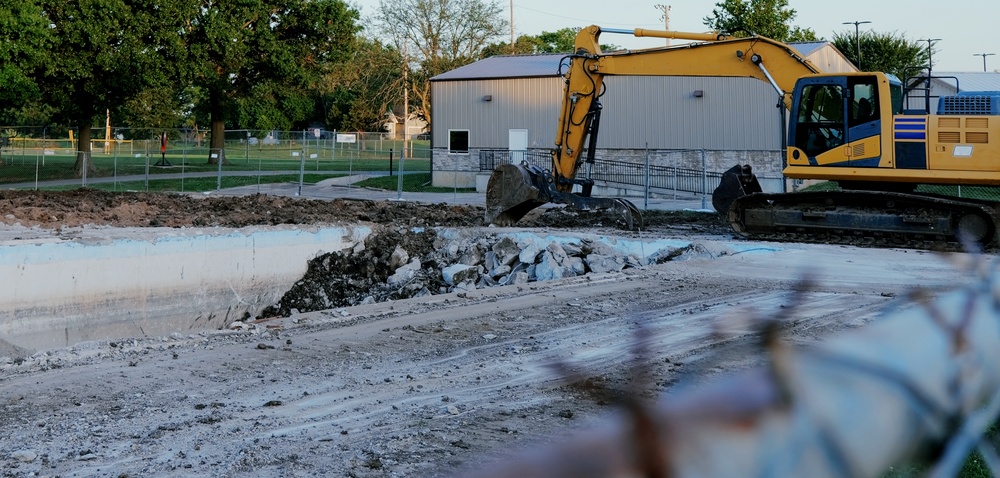
- Operation of heavy machinery, including excavators and bobcats, all of which require a licensed operator
Frequently Asked Questions About House Demolition in Wollongong
Do I need a DA or CDC to demolish a house in Wollongong?
Most residential demolitions in Wollongong require either a CDC or a DA before work begins. A CDC covers simple sites with no heritage constraints and can be approved in around 20 business days. A DA is normally needed for more complex sites and generally takes 40 to 60 days or longer.
Can I demolish a fibro house myself in Wollongong?
In most cases, no. Fibro houses built before 1990 almost certainly contain asbestos. The asbestos must be professionally assessed and, in most cases, professionally removed before any demolition begins. Even after asbestos clearance, the structural demolition of an entire dwelling requires licensed operators and approved demolition plans.
How long does demolition approval take in Wollongong?
- CDC approval: approximately 20 business days for eligible sites
- DA approval: typically 40 to 60 business days, and longer for complex or heritage sites
What happens if I demolish without approval in Wollongong?
Many local councils have regulations in place to ensure site safety during demolition and expect compliance with all regulations. Unapproved demolition can result in:
- Fines exceeding $100,000
- A stop-work order halting all activity on the site
- A remediation order demanding that you make good any damage at your own expense
- Legal action if neighbouring properties are affected
What waste disposal rules apply to house demolition in Wollongong?
Debris and waste materials must be taken to an approved facility for disposal. The Kembla Grange Waste Depot is one of the approved options in the Wollongong area. Asbestos waste must be handled separately and transported to an approved asbestos disposal facility.
Can I use an excavator or bobcat to demolish my own house in Wollongong?
No. NSW Work Health and Safety legislation requires that heavy machinery, including excavators, bobcats, and front-end loaders, be operated by a licensed operator. You cannot legally operate this equipment yourself unless you hold the relevant high-risk work licence.
Ready to Move Forward With Your Wollongong Demolition Project?
Understanding the rules is the first step. Taking action with the right team behind you will keep your project on track, on budget, and on the right side of the law.
Wollongong City Demolition provides licensed residential demolition services across Wollongong and surrounding suburbs. The team has direct experience with local Council requirements, asbestos regulations, and the full range of residential demolition projects, from single outbuildings to complete knockdown-rebuild preparations.
Get in touch with Wollongong City Demolition to discuss your residential project.




Leave A Comment